Baby & newborn passport photos
The rules are more forgiving for babies than most parents expect — but the photo still has to show the baby alone, facing up, on a plain background. Here is how to get one at home in ten minutes, and a free tool that crops and checks it with the child rules applied.
Make the photo
Child under 10 is already ticked, so strict head-size, eye-position and expression failures become warnings for you to judge. Choose the country in step 1.
1Choose the document
- Photo size
- 51 × 51 mm
- Head height
- 25–35 mm
- Background
- Plain white
- Output
- 1200 × 1200 px · 600 dpi
Official requirements
- Colour photo, 51 × 51 mm (2 × 2 in)
- Head from top of hair to chin: 25–35 mm
- Eye line 28.6–35 mm above the bottom edge
- Plain white background
- Wear coloured attire — not patterned, textured or pure white
- Do not retouch, enhance or soften the photo
- Full face, front view, looking straight at the camera
- Eyes open, level and clearly visible — no hair across the eyes
- Natural expression with the mouth closed
- Even lighting — no shadows on the face or the background
- Colour photo, sharp, printed on photo paper with no retouching
- Glasses: no tinted or dark glasses; avoid glare — tilt the head slightly if needed
- Head coverings: only for religious or medical reasons, with the full face visible from chin to forehead
- Taken within the last 6 months
2Upload your photo
3Compliance check & download
Upload a photo and it will be cropped to the exact size, then checked against every measurable rule for the document you chose.
Newborn to ~5 months: the white-sheet method
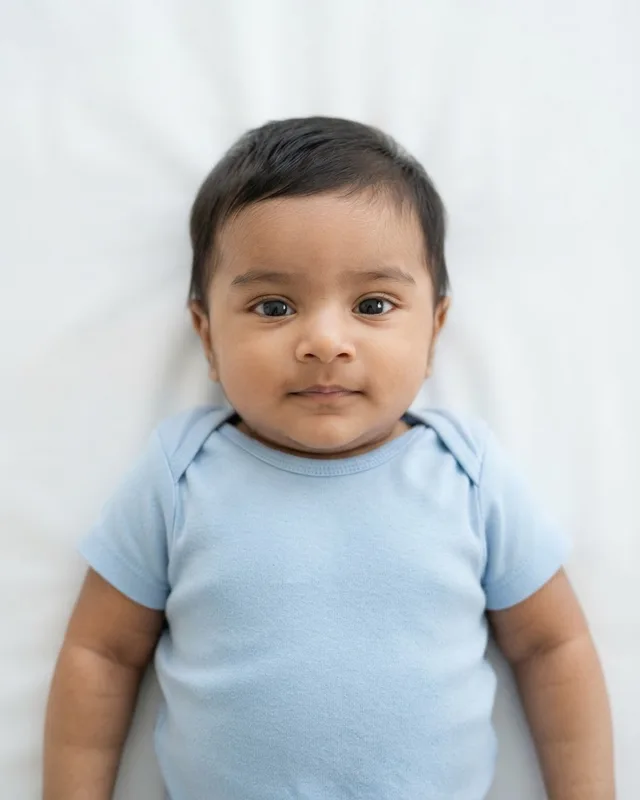
- 1Lay a plain white sheet on the floorSmooth it flat near a window — creases show as shadows. A white cot sheet or pillowcase is fine; avoid cream or patterned fabric.
- 2Lay the baby on their backHead towards the window so the face is lit evenly. Wait for a calm moment: fed, changed, not sleepy.
- 3Shoot from directly aboveHold the phone flat over the baby's face, about 60–80 cm up, rear camera, no flash. Take a burst of 10–20 frames.
- 4Nothing else in frameNo hands, dummy, toy, blanket edge or your own shadow. If you must support the head, do it from below the shoulders where the sheet hides your hand.
- 5Upload and let the tool cropPick the country, tick Child under 10 (already on for this page) and choose the frame where the eyes are most open and the head is straight.
Sitting babies and toddlers
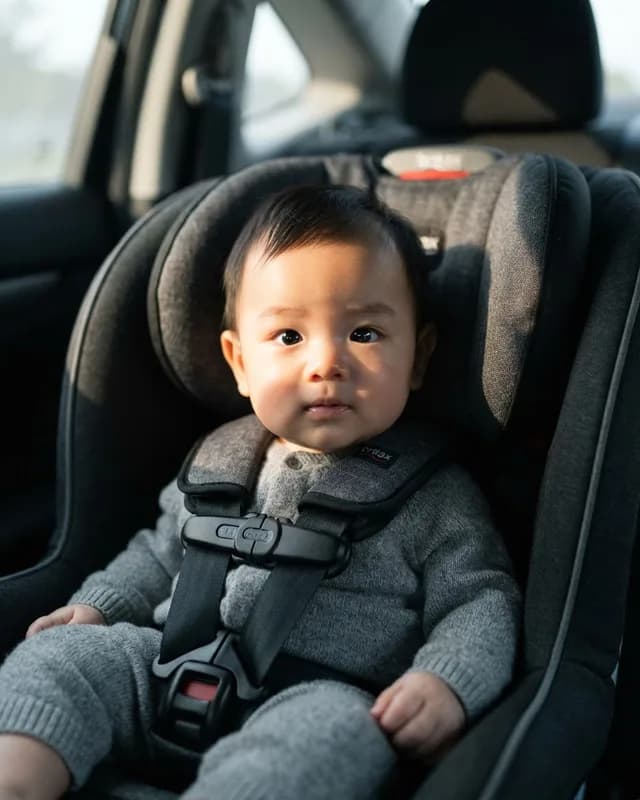
- 1Use a car seat or bouncer covered with a white sheetTuck the sheet so no straps, buckles or seat edges show. Put it in front of a plain wall or facing a window.
- 2Sit the baby upright, facing youHave a second person stand behind the camera making faces or a noise so the baby looks at the lens.
- 3Camera at the baby's eye levelAround 1–1.5 m away, rear camera, no flash. Burst mode again — babies move.
- 4Toddlers: same rules as adults, mostlyPlain top, hair off the face, mouth closed if you can get it. A slight smile is usually tolerated for under-6s; a big open-mouth laugh is not.
Why baby photos get rejected
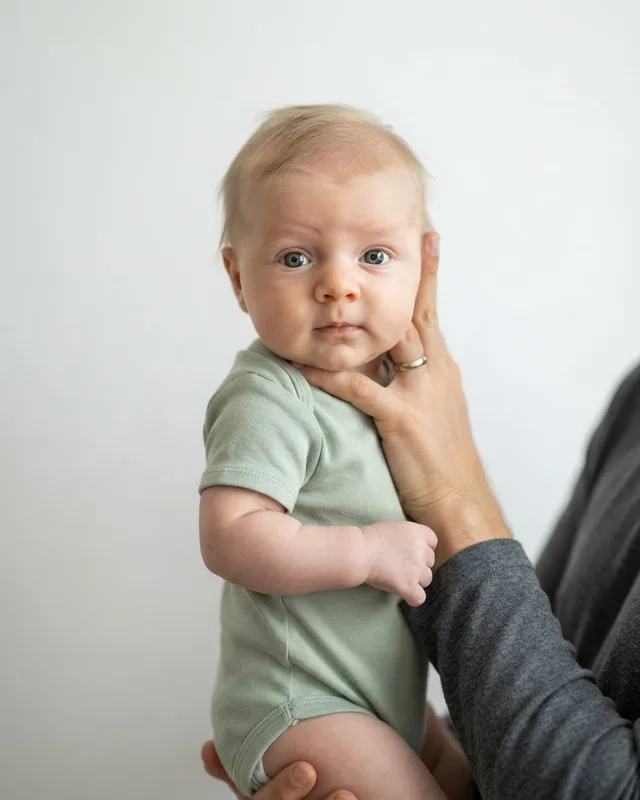
- ✕A hand, arm or lap visible (holding the baby up)
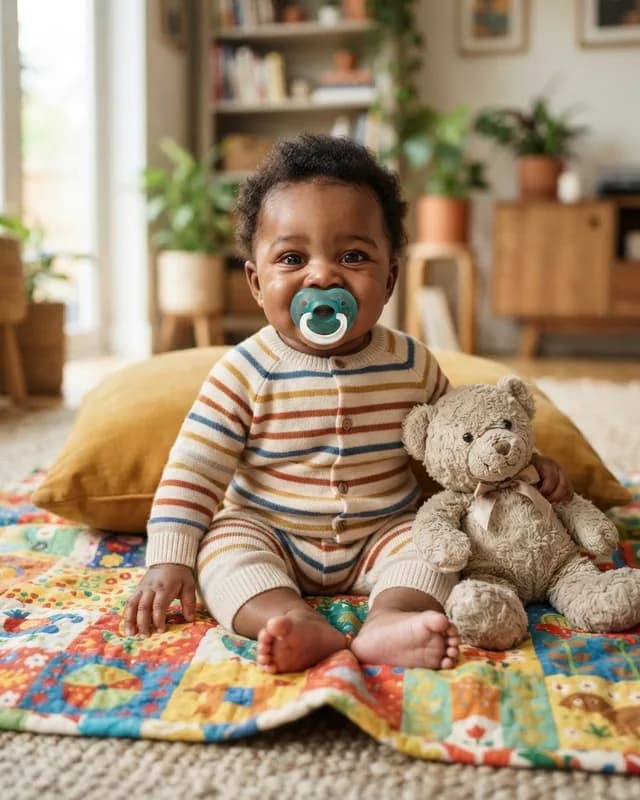
- ✕Dummy, bottle, toy or comforter in the frame
- ✕Patterned blanket, car-seat fabric or straps behind the head
- ✕Eyes shut when the country requires them open (older babies)
- ✕Baby's head turned to the side or tipped back
- ✕Shadow of the phone or parent across the face or sheet
- ✕Hat, headband or hood; hair covering the eyes
- ✕Photo older than the allowed window — babies change fast, so take it right before applying
Baby photo rules by country
The size and background are the same as for adults; what changes is expression, eyes and head size.
Head size and eye-position rules are relaxed; babies under 1 need not have their eyes open. The child must be alone in the frame — no chair backs, toys or other people.
51 × 51 mm · Plain white
Eyes need not be fully open. The baby must be alone: lay them on a plain white sheet or cover a car seat with a white sheet. No hands may show — even holding the head.
51 × 51 mm · Plain white or off-white
Under 1: eyes need not be open, and you may support the head with your hand as long as the hand is not visible. Under 6: no need for a neutral expression or to look directly at the camera.
35 × 45 mm · Plain cream or light grey
Eyes open is preferred but a neutral expression is not required for infants. The baby must be alone, with no toys, hands or props visible; a white sheet over a car seat is accepted.
50 × 70 mm · Plain white or light-coloured
Expression and mouth rules are relaxed; under 1, eyes need not be open. Head size rule still applies where possible.
35 × 45 mm · Plain white or light grey
Most Schengen states accept a smaller head (down to about 50 % of the frame) and relaxed expression for young children; Germany specifies 50–80 %. Check your consulate.
35 × 45 mm · Plain light (white or light grey)
Expression, eye and head-position rules are relaxed; the head may fill less of the frame. The DIA online checker applies the child rules automatically.
35 × 45 mm · Plain light grey (contrasting with face and hair)
Other countries: open the requirements page for the size and background, and check the issuing authority's guidance for child relaxations. Last reviewed 2026-09-20.
Questions
Can a newborn's eyes be closed in a passport photo?+
For most countries, yes for babies under 1 — the US, UK, India, Canada and Australia all accept eyes not fully open for infants. Try for open eyes anyway: take a burst of shots after a feed when the baby is alert.
Can I hold my baby's head for the photo?+
Only if your hand is completely hidden. The safest method is to lay the baby on a white sheet, or to support them from below the shoulders under the sheet. A visible hand is one of the most common reasons baby photos are rejected.
Does the head-size rule apply to babies?+
It is relaxed almost everywhere — India (under 10), New Zealand (under 5), Germany (50–80 %) and most Schengen states accept a smaller head. The tool's Child under 10 option turns strict head-size failures into warnings so you can judge.
Do babies need to have a neutral expression?+
Usually no for babies and often no for children under about 6, but the mouth should be closed where possible and no toys or dummies may show. The UK explicitly drops the expression rule under 6.
Can I take a baby passport photo with my phone?+
Yes. Use the rear camera, no flash, daylight from a window, and shoot from directly above with the baby on a white sheet. Upload the best frame here and the tool crops it to the exact size and checks it.
How recent does a baby's passport photo need to be?+
The same rules as adults — typically within 6 months, within 1 month for the UK. Because babies change so quickly, take the photo in the week you apply.
The babies in the example photos are AI-generated and fictional.
Got a calm moment? Make the baby's photo now — free, in your browser.
Make my photo →